

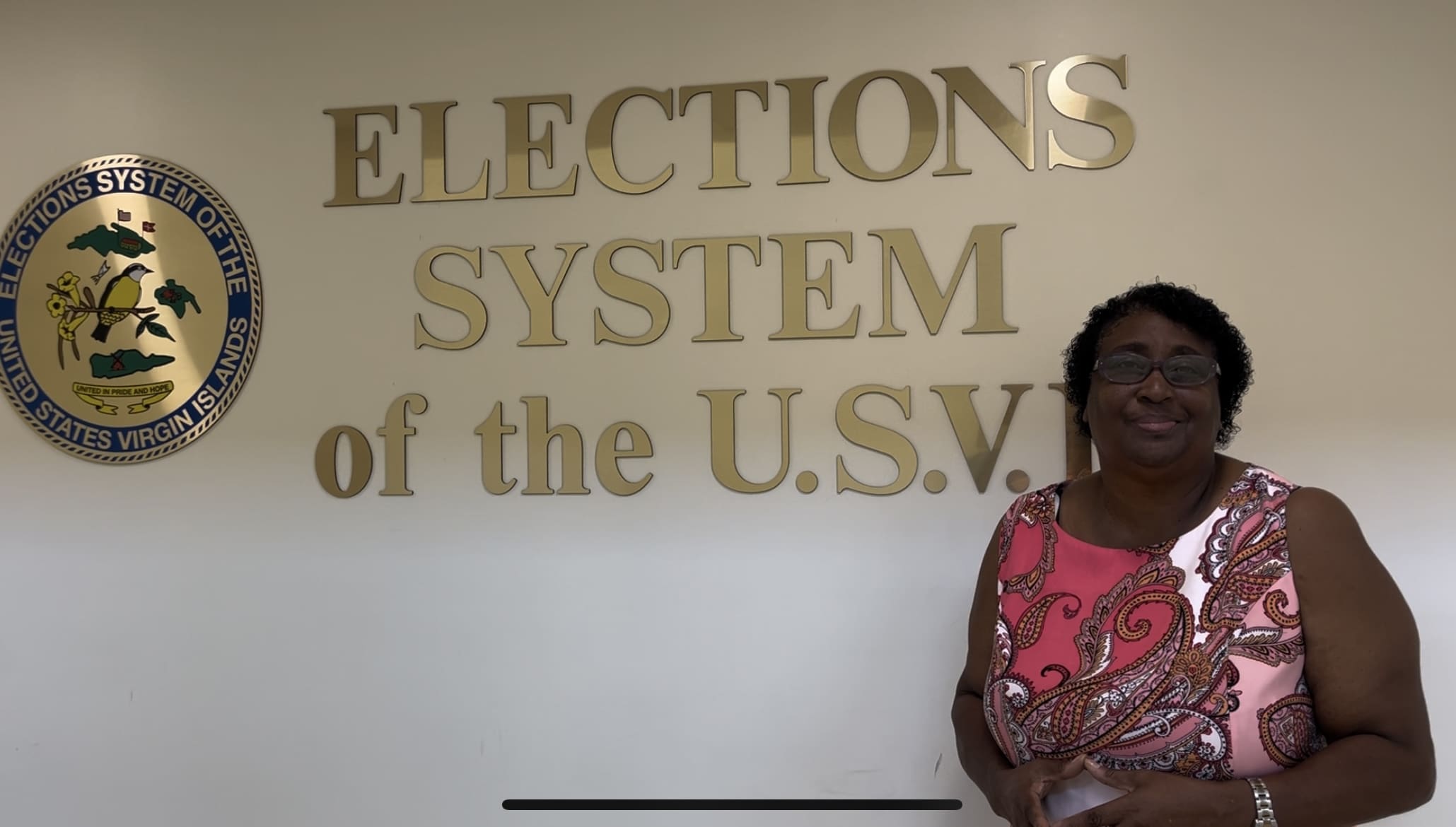
Late Tuesday, the V.I. Board of Elections convened for an hourlong executive session, emerging around 6:15 p.m. to vote unanimously that Attorney General Gordon Rhea would represent the board members named in a lawsuit filed by Supervisor of Elections Caroline Fawkes.
The motion, brought by Board Member Raymond Williams and seconded by Board Member Epiphane Joseph, comes amid a heated legal battle over the reinstatement of disqualified congressional candidate Ida Smith and the broader local debate over residency requirements for candidates in the Virgin Islands.
Fawkes, who filed the lawsuit on Oct. 17, is challenging the board’s decision to reinstate Smith on the ballot for delegate to the U.S. House of Representatives. Smith was originally disqualified in June for failing to meet residency requirements, including not submitting a tax return transcript by the June 10 deadline, a key requirement under Virgin Islands law. Fawkes contends that, under 18 V.I.C. §411, the authority to determine a candidate’s qualifications falls solely to the supervisor of Elections. She argues that Smith’s failure to meet this requirement was sufficient to remove her from the race and that the board’s move to reinstate her was both improper and unlawful.
The board, however, voted on Sept. 4 to reinstate Smith, overturning Fawkes’ decision. Fawkes responded with the lawsuit, seeking a temporary restraining order and injunction to prevent Smith’s name from appearing on the ballot. In her legal filing, Fawkes asserts that the board’s decision was beyond its legal jurisdiction and calls for the court to reaffirm the supervisor’s exclusive authority over candidate eligibility.
A legal battle could also highlight a deeper issue in Virgin Islands election law: the lack of clear definitions around residency requirements, particularly as it pertains to the terms “resident” and “inhabitant.”
Ambiguity in local election law has continued to come to the forefront – earlier this year, in a separate case, District Court Chief Judge Robert Molloy struck down several provisions of the Virgin Islands election statutes, ruling them unconstitutional. In his ruling, Molloy sided with the Republican National Committee and found that several sections of the territory’s election laws violated the First Amendment by imposing undue government control over internal party processes, including primary elections and party organization.
Fawkes has said the ruling further underscored the fragility of the current election framework and the urgent need for reform to prevent future conflicts. Ultimately, it also affected both primary elections this year, with the Republican Party opting to hold its own while the Democratic primary ballot only included candidates running for public office.