

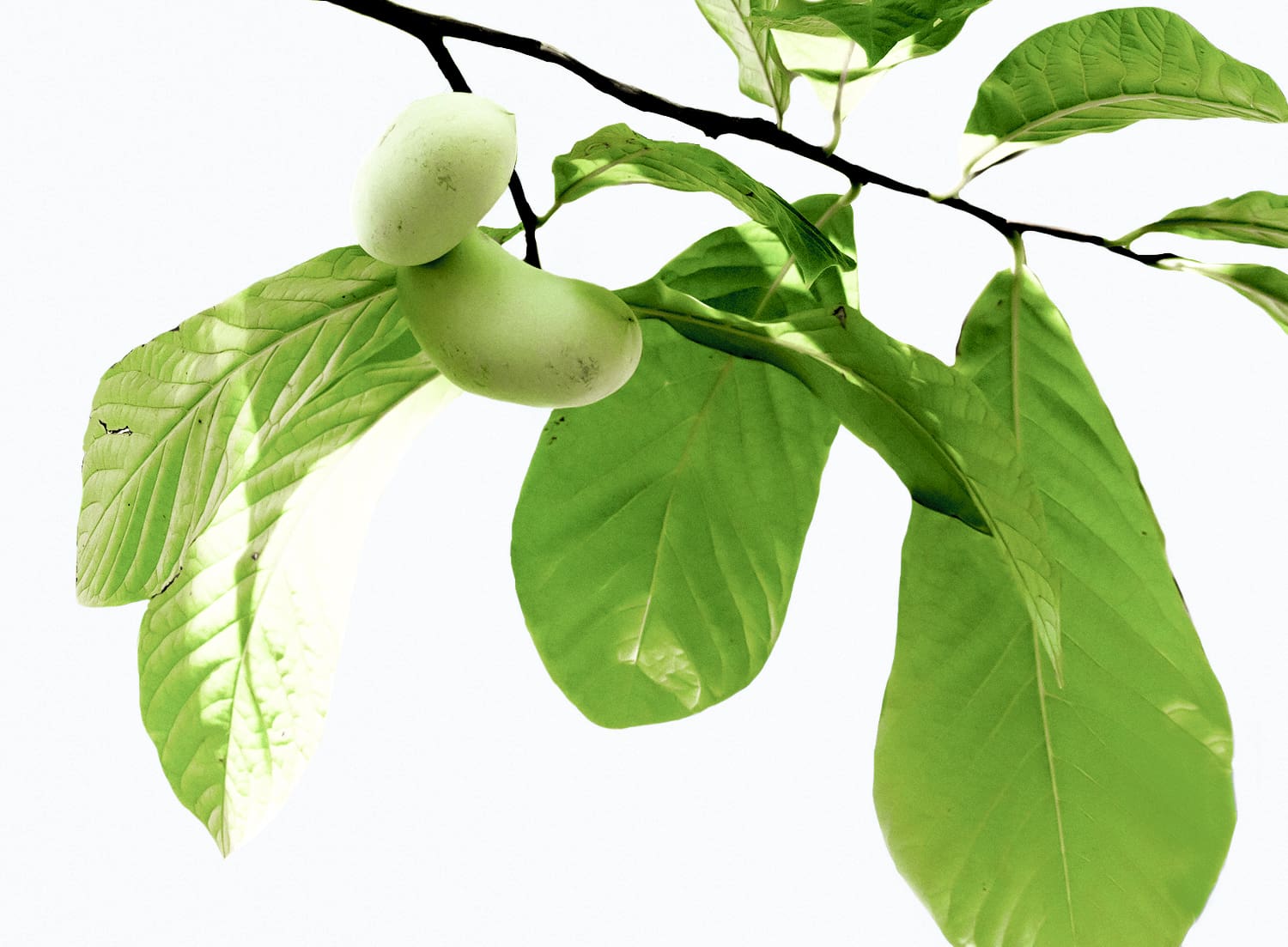
The North American Pawpaw tree (Asimina triloba) is a member of the Annonaceae or custard apple family – the only member that is native to the mainland United States (the eastern part of the country). The other members of this family are tropical trees from the Caribbean and South America. These trees are not the same as Papayas, which are also called ‘pawpaws’ in the Caribbean.
I saw a few Pawpaw trees in New York City recently, labeled in a botanical garden area highlighting native plants. I was curious because I haven’t heard much about them, even though they were described as producing the largest native fruits in the U.S. I was particularly interested because we have other members of the custard apple family – Sugar Apple and Soursop trees – growing in our yard in St. John.
We have also grown Papayas, and the use of the same name for two different and unrelated fruits is quite confusing.
Papayas (Carica papaya) are classified as part of the Caricaceae family. Early European explorers/invaders called these fruits ‘papaya’, based on the indigenous people’s name for them, which for some people devolved into ‘pawpaw’. When similar-looking fruits were found by European colonists in northern territories they got called ‘pawpaws’ too. Even though the fruits aren’t really that similar.
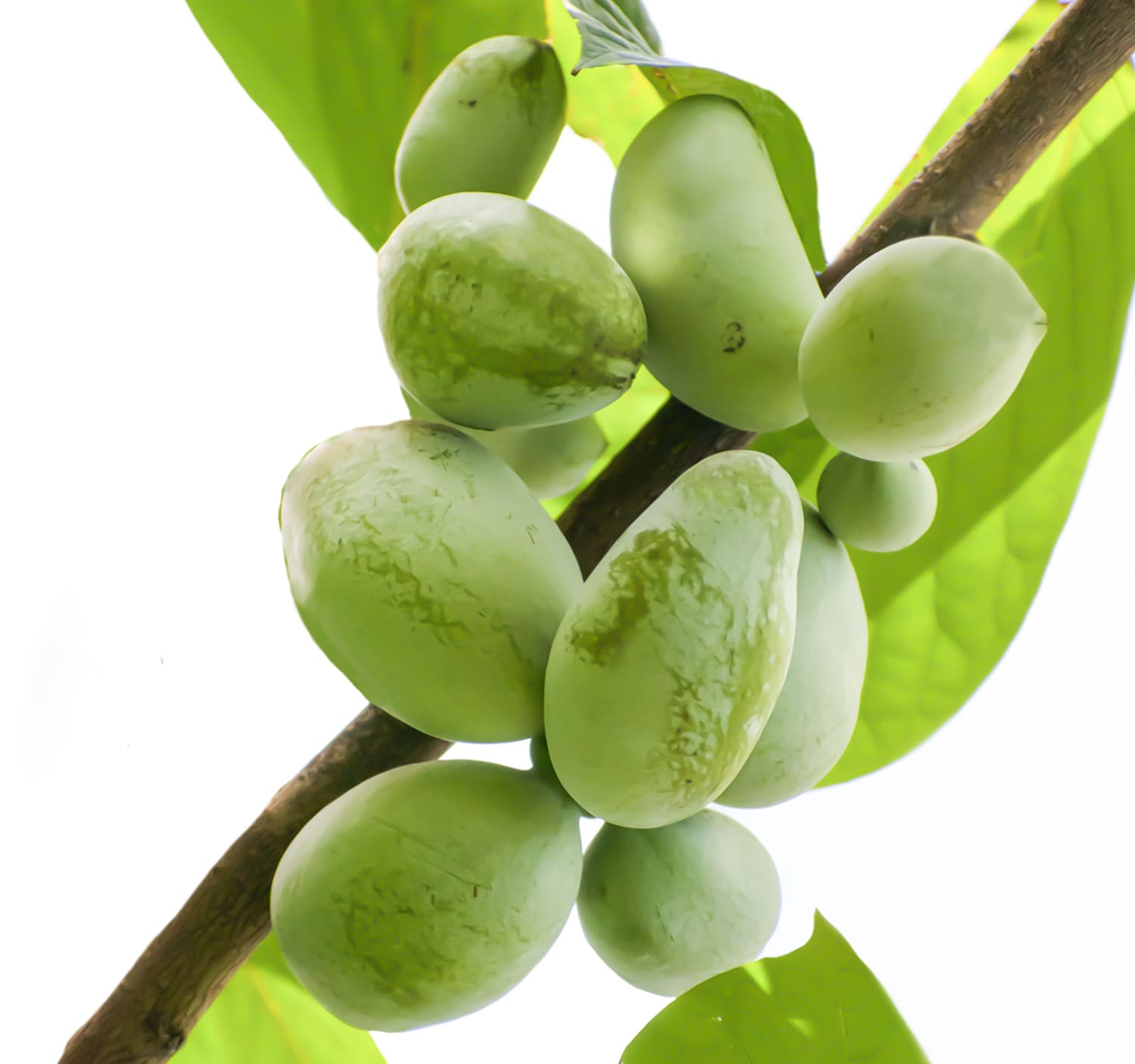
Papaya fruits are bigger and rounder than the mainland Pawpaws. However, both types of fruits do grow in clusters, and can look similar from below.
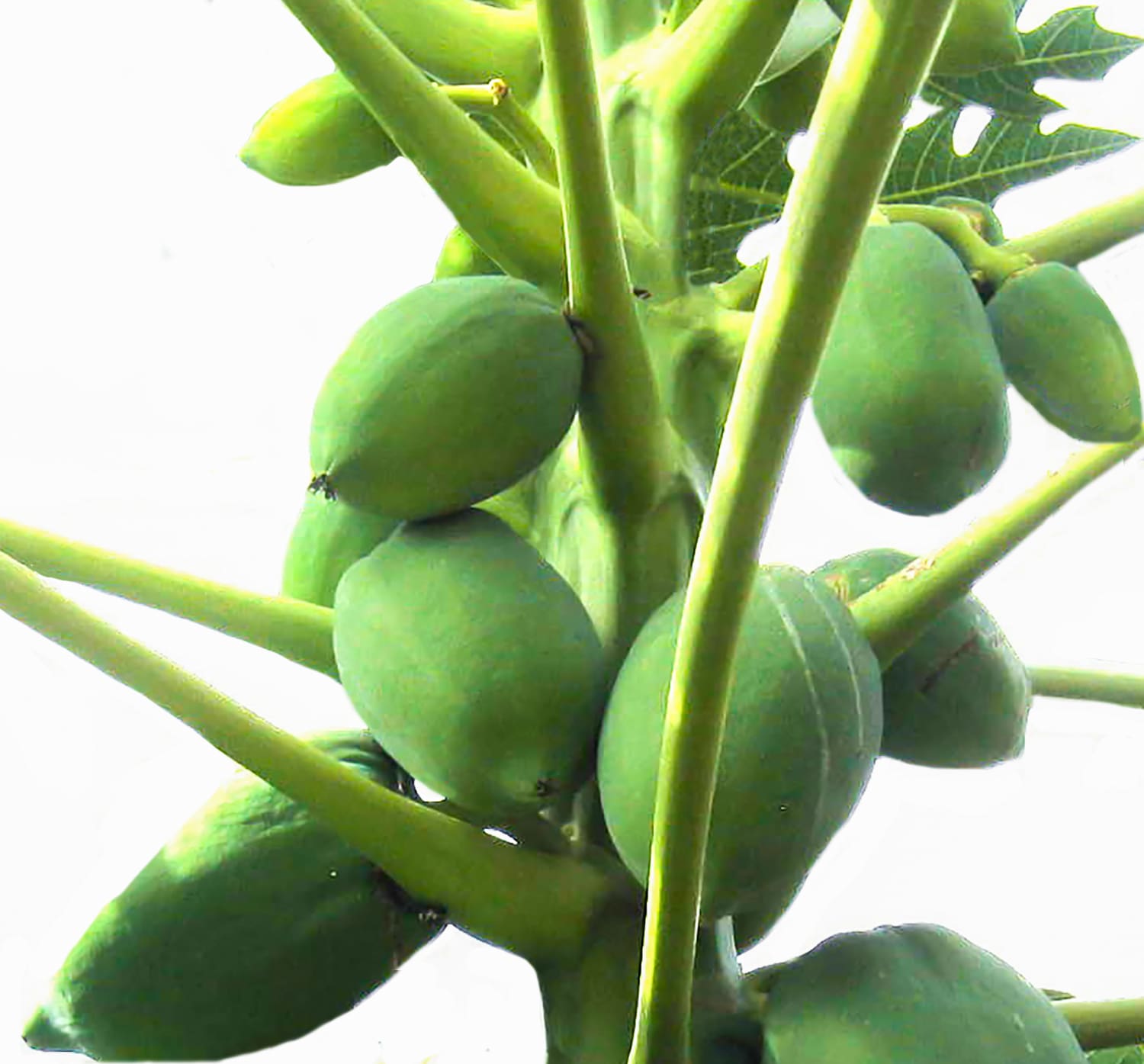
However, Papayas are larger, and the skin of their fruit turns yellow/orange when it’s ripe.
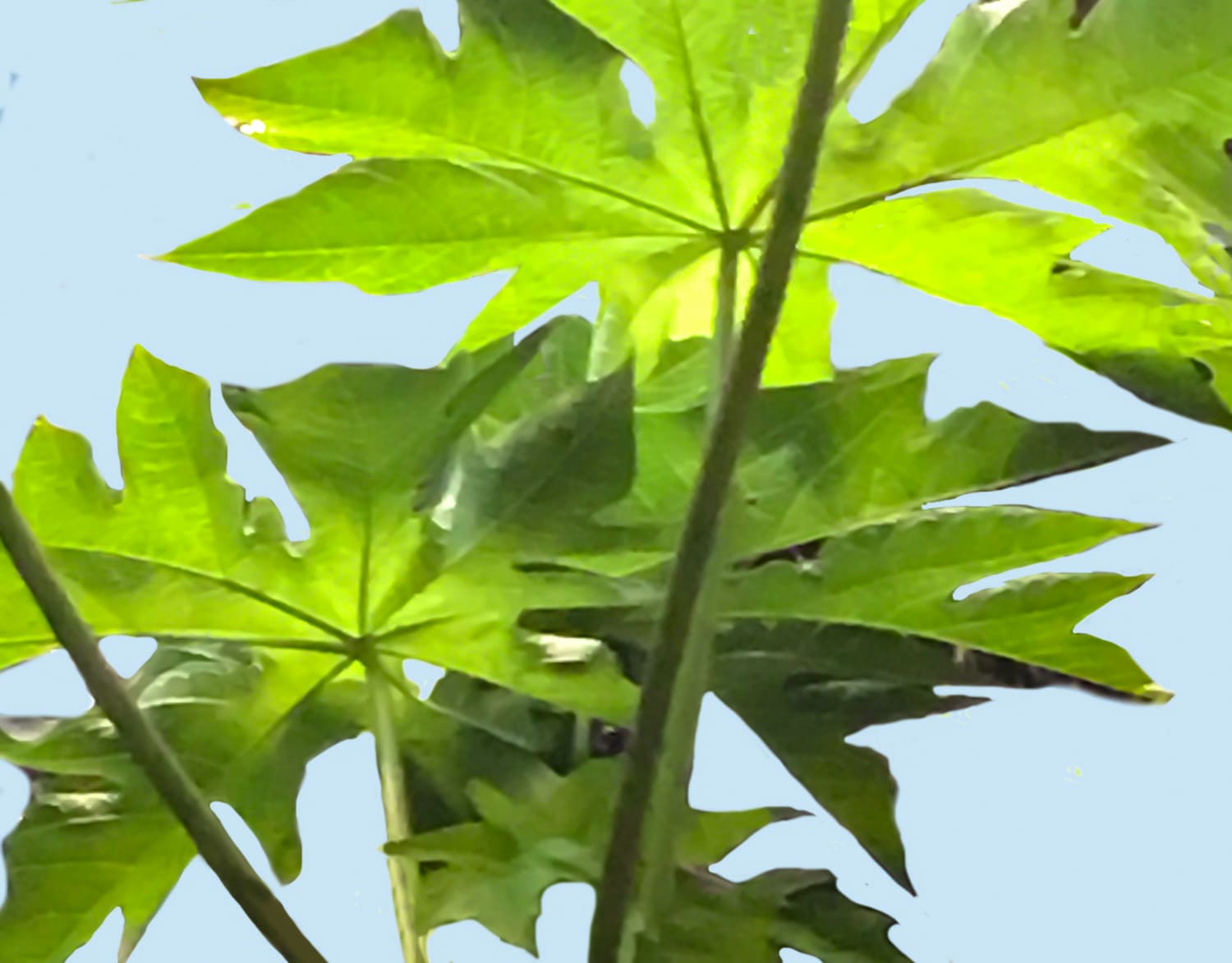
Also their leaves are quite different. Papaya leaves are hand-shaped and have with deep lobes.
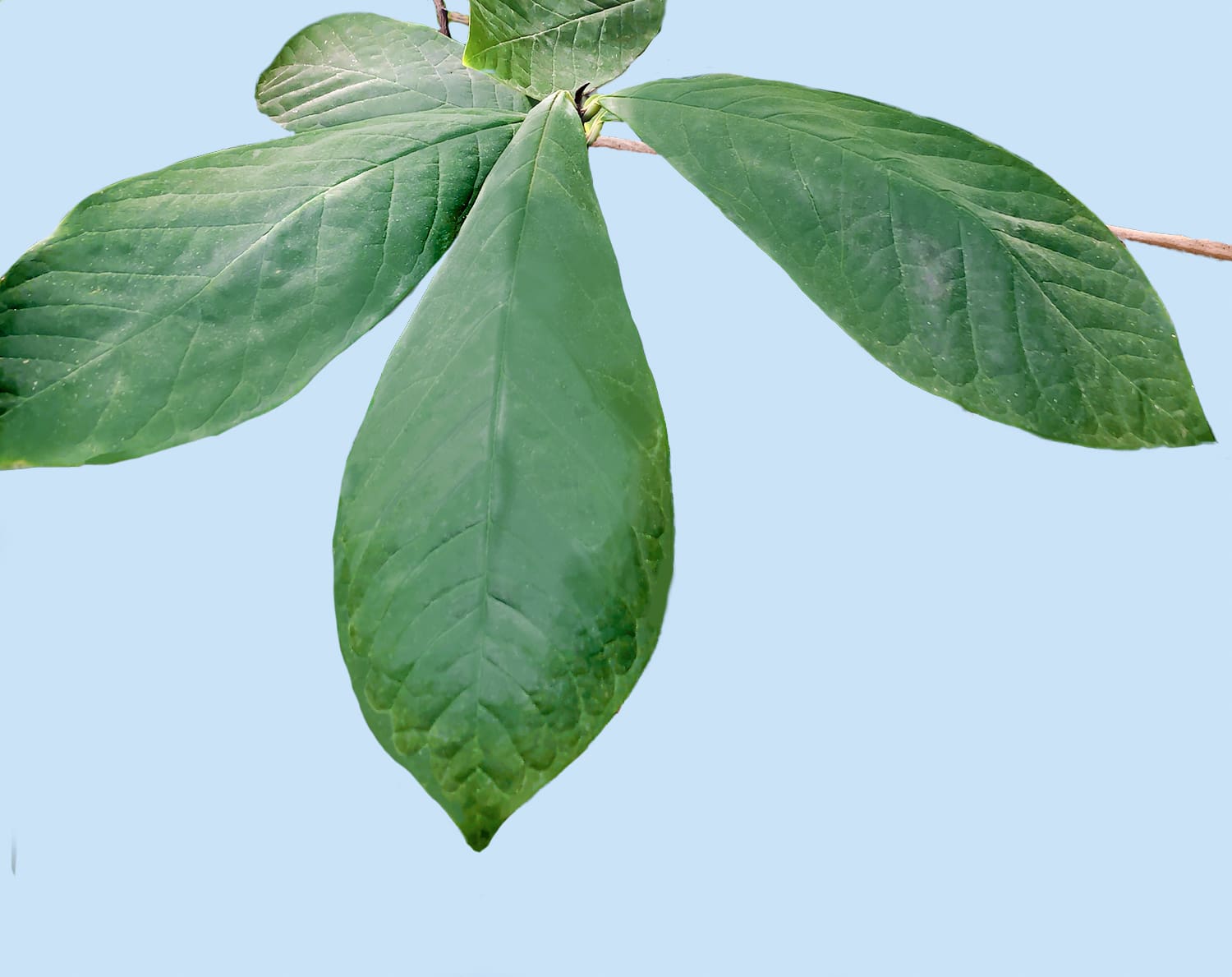
Pawpaw leaves are also large but have a simple, teardrop shape.
And Papayas are not really trees, but large herbaceous plants that are relatively short-lived.
Anyway, it is clear that these North American Pawpaw trees are not botanically related to Papayas.
The next question is how they fit into the mostly tropical custard apple family. Annonaceae is a large family of trees, containing over 2000 species, which are further differentiated by subfamily, tribe and genus. The Soursops, Sugar Apples and North American Pawpaws are directly linked until you get to the genus level: then Pawpaws are classified in the Asimina genus, while soursops and sugar apples are in the Annona genus.
What do they all have in common besides their botanical ancestors?
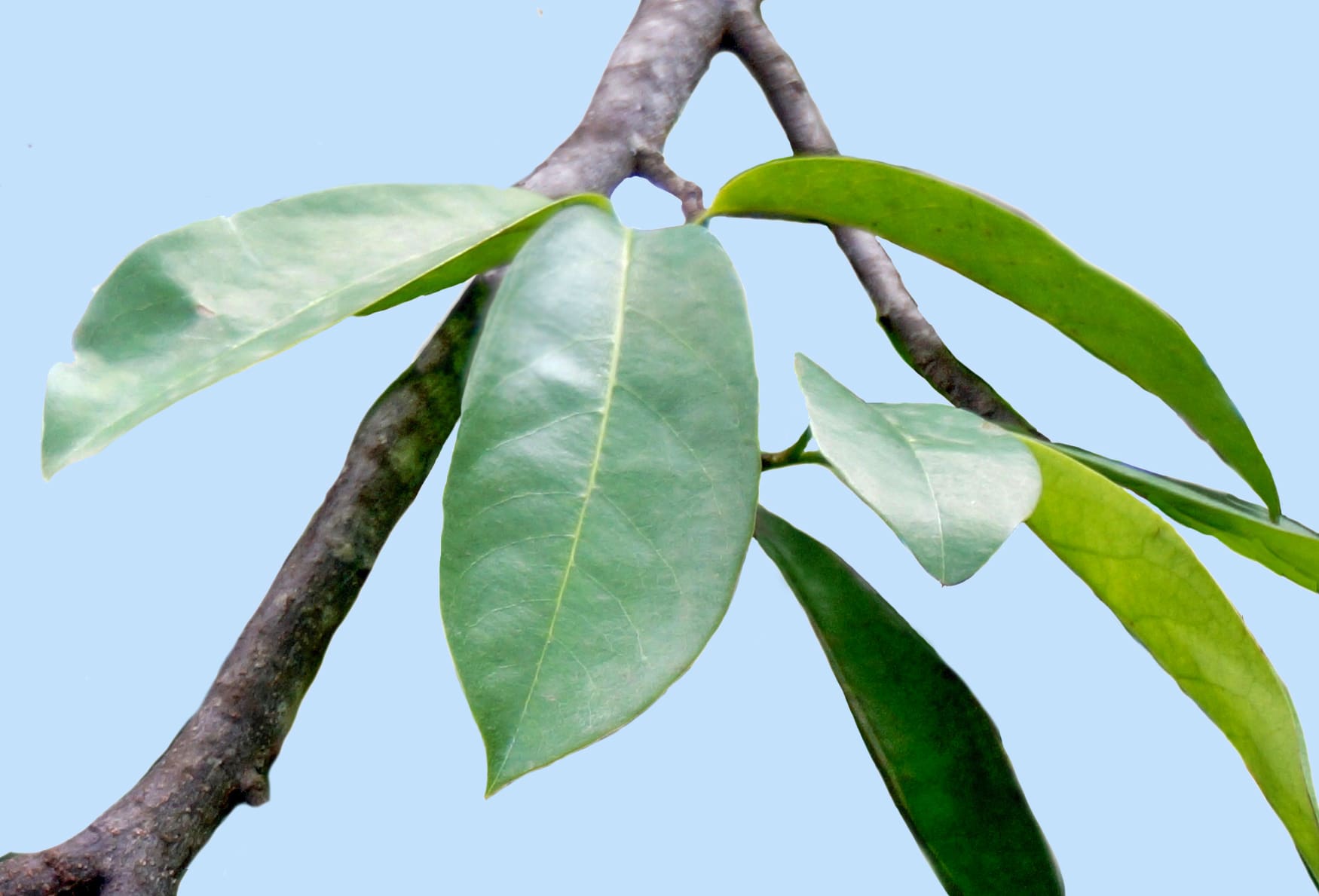
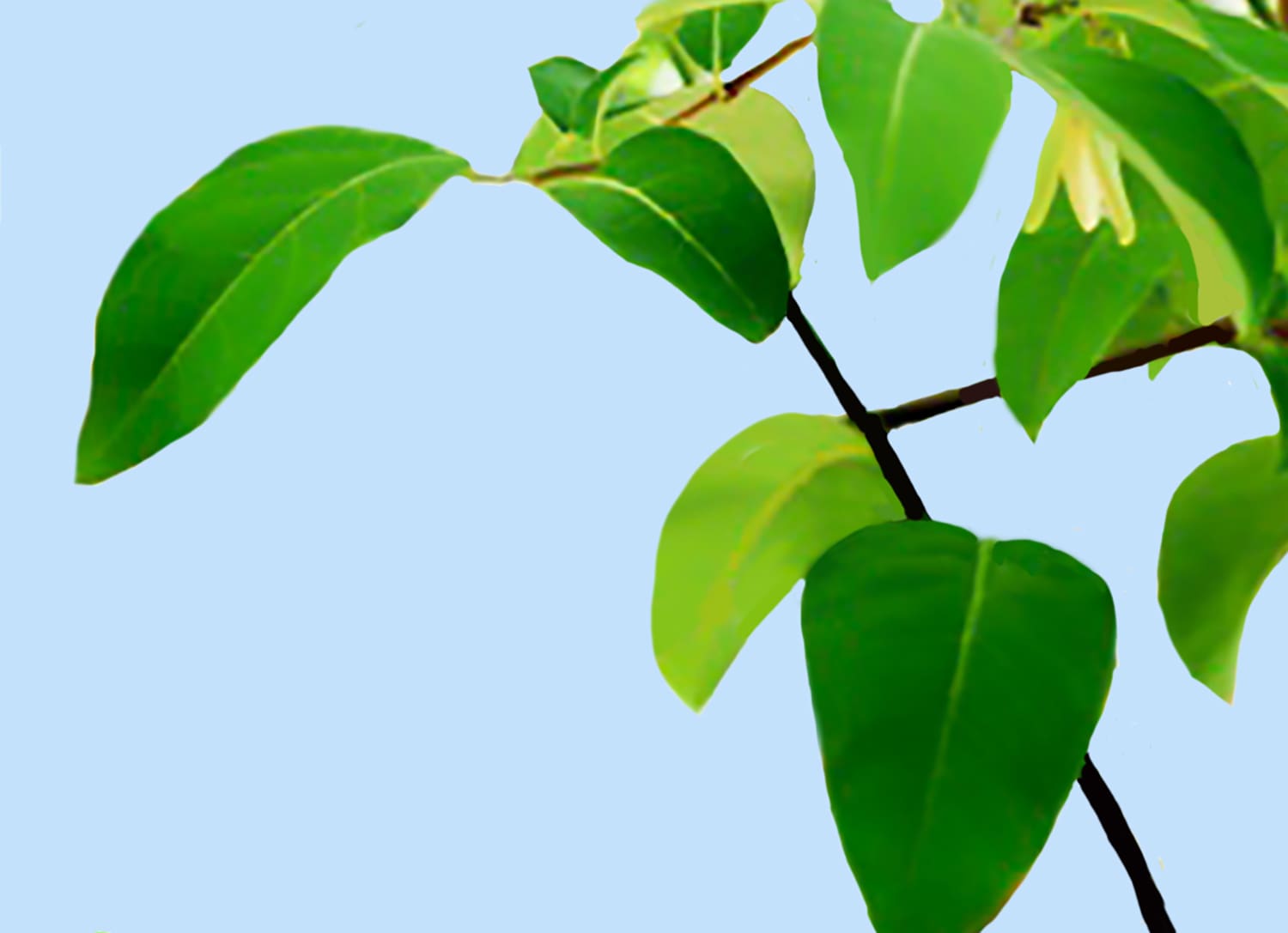
They do all have simple leaves with smooth (not serrated) edges.
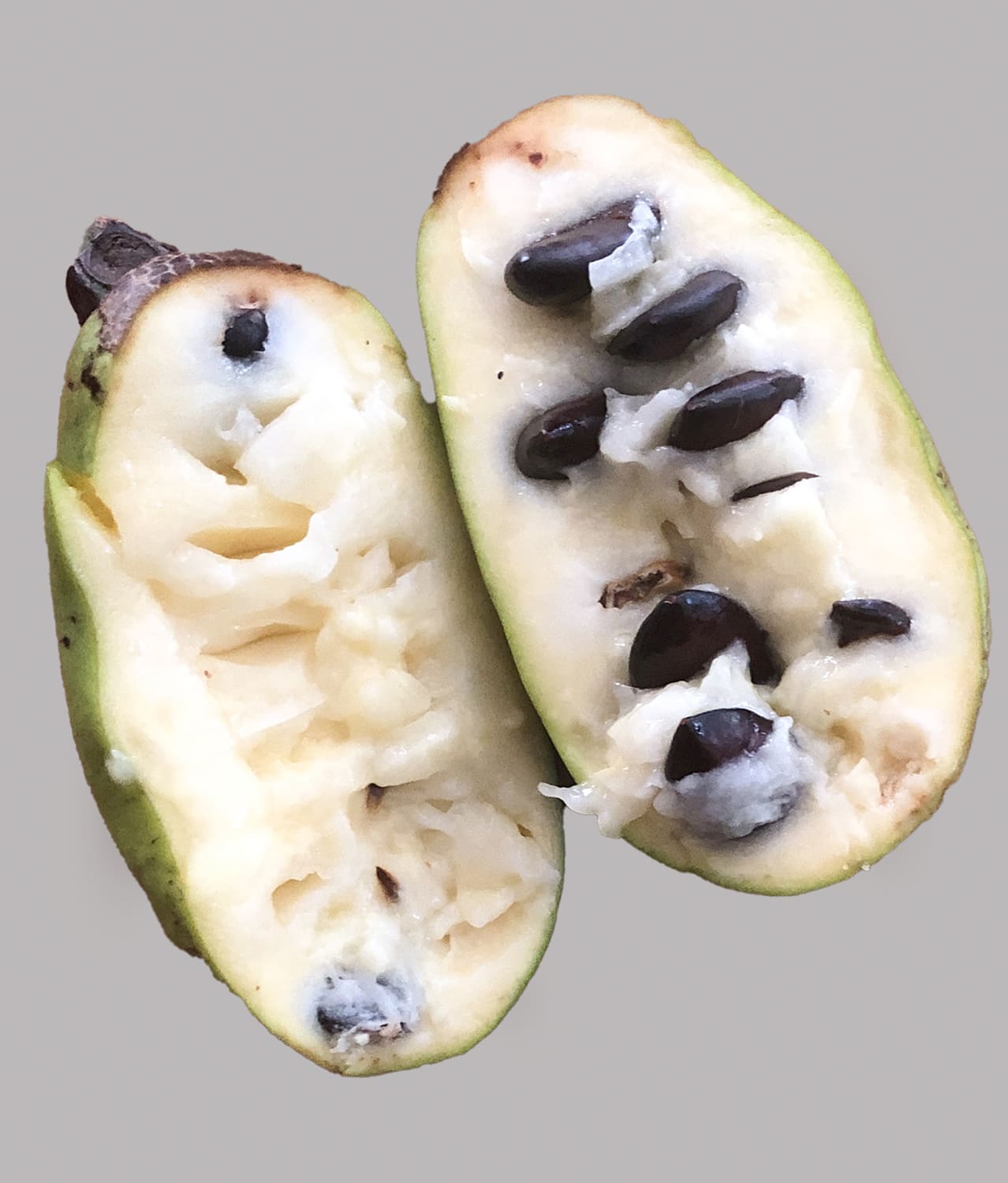
And they have similar custardy fruit with multiple dark seeds.
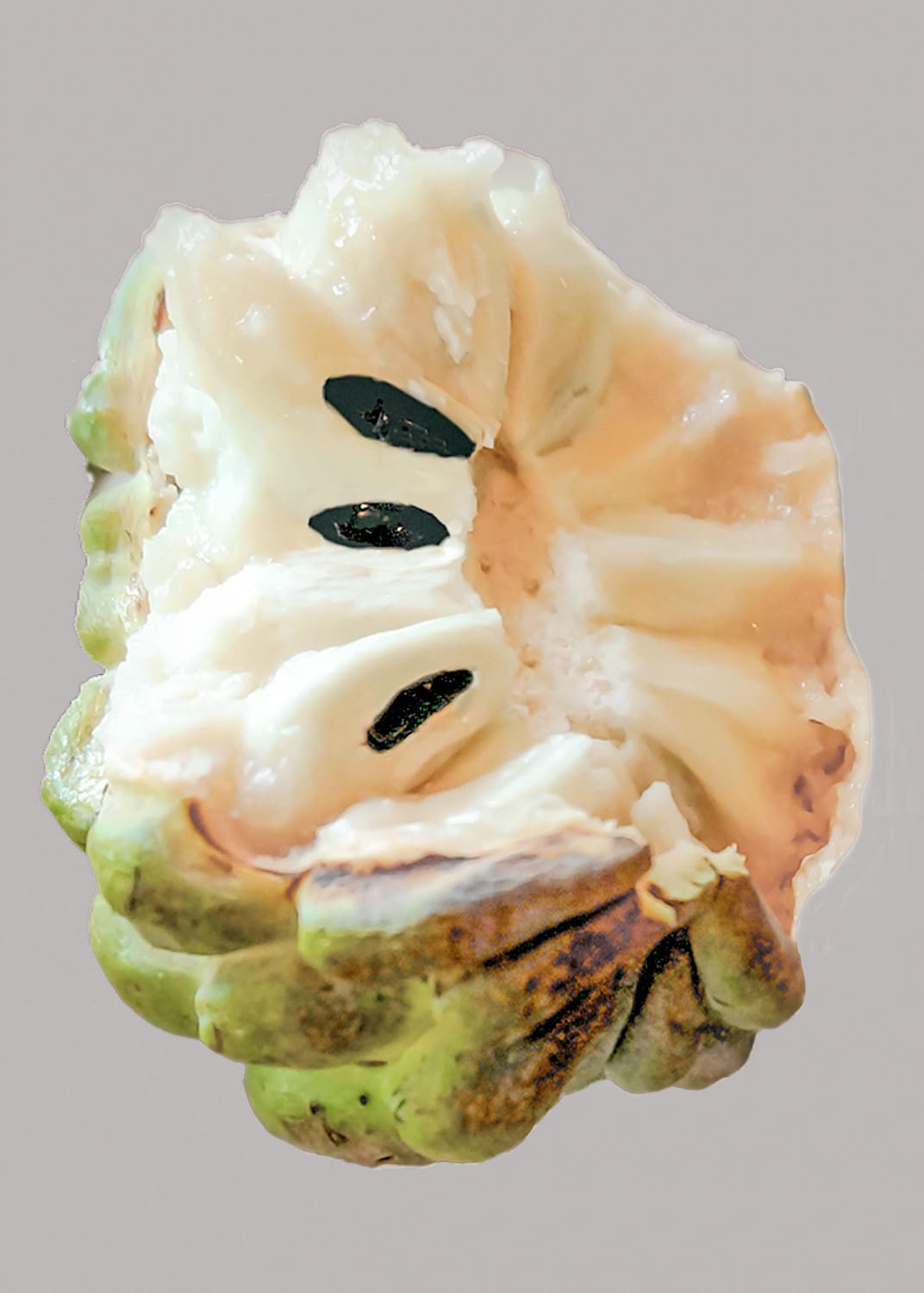
Since I love Sugar Apples and Soursops, I had to wonder why hardly anyone is eating these native Pawpaws in the U.S.
One reason is that those sweet, soft insides, plus soft skins and numerous seeds, make the Pawpaw fruit difficult to process for commercial distribution. (Like the Sugar Apples and Soursops.) Some Native American tribes reportedly dried the Pawpaws and made cakes out of them that could be stored for later use. Early European colonists may have done the same, but certainly by the time there were imported tropical fruits available the native Pawpaws were left behind.
Another reason they aren’t widely consumed could be that fairly early on they became viewed as low-class fruits. While some mainland names like ‘American custard apple’ and ‘Quaker delight’ referenced the sweet, flavor of the Pawpaw fruits, other nicknames that developed were more pejorative, like ‘Indian banana’, ‘poor man’s banana’, and ‘hillbilly mango’, reflecting racial and class prejudices.
In addition, Pawpaws don’t grow fruit very easily on their own. Although these trees have been around for over 50 million years, they now may be having trouble adapting. Their flowers are designed to be pollinated by flies and beetles that seem to be scarce these days, or just not that interested or effective, which creates reproductive challenges.
The Pawpaw trees can replicate themselves through root suckers that create connected groves of the trees, so you might find them growing in a group. But when all the trees in the grove are genetically identical, they aren’t able to produce fruit because they evolved so individual trees can’t pollinate their own flowers. (More genetic diversity is helpful for long-term survival.) So even if the appropriate flies and beetles show up to pollinate the trees’ flowers, they need to bring pollen from a genetically different pawpaw tree, and there might not be one close by.
Even when there is fruit, it is hard for the Pawpaw trees to spread because they need seed dispersers. Their fruit with its big seeds was originally designed to be eaten by large mammals that roamed the western hemisphere before the Ice Age (like wooly mammoths and giant sloths). Later, bears took over consuming the Pawpaw fruit and dispersing the seeds across the countryside. And then for a long time Native Americans carried the seeds and cultivated them. Now there are not many farmers and gardeners planting them.
These days, birds, squirrels, racoons and opossums may be the ones most likely to eat the wild Pawpaw fruits. But small mammals can only move the seeds short distances and the seeds are too big for most birds to eat and then disperse elsewhere, so these trees are not going very far.
This Pawpaw story is seeming pretty sad, but it could turn out to have a sweet ending if the fruit now gets cultivated by more people and becomes more popular and appreciated.
A couple of weeks ago I was excited to find a Pawpaw tree with fruit on it, and I got to taste one for the first time. It was definitely sweet, sort of like mushy banana with a bit of mango flavor.
I would be happy to eat more Pawpaws, but I’m afraid I may not find many more of them. Still, it has been a wonderful experience to explore the history of this small, largely forgotten fruit and be connected so vividly with a variety of people and animals that lived ages ago. Unexpected food for thought.
Gail Karlsson is an environmental lawyer, writer and photographer. She is the author of two books about the Virgin Islands – The Wild Life in an Island House, and the guide book Learning About Trees and Plants – A Project of the Unitarian Universalist Fellowship of St. John. She has also recently published A Birds’ Guide to The Battery and New York Harbor. Follow her on Instagram @gailkarlsson and at gvkarlsson.blogspot.com.