

Are you the kind of person who enjoys a quiet morning walk on a beach?
Do you find sea turtles to be more-than-a little-bit attractive?
Do you expect to be on St. John for most of the next several months?
If so, then you might be an ideal candidate to join a team of more than 70 volunteers who regularly patrol the beaches of St. John to protect endangered sea turtles.
The Friends of the Virgin Islands National Park Sea Turtle Program is seeking additional volunteers and will hold a two-hour training session at 10 a.m. on Saturday at Cinnamon Beach. Please RSVP to vinpturtles@friendsvinp.org if you’re interested in participating.
New volunteers are required to attend this training session to learn how to recognize signs that a female sea turtle has crawled ashore during the night to lay her eggs, and then what to do if nesting activity is suspected.
Last year was a record-breaking year for turtle nesting activity on St. John. Turtle team members found 44 nests, resulting in 3,597 baby turtles – known as hatchlings — making it to the sea.
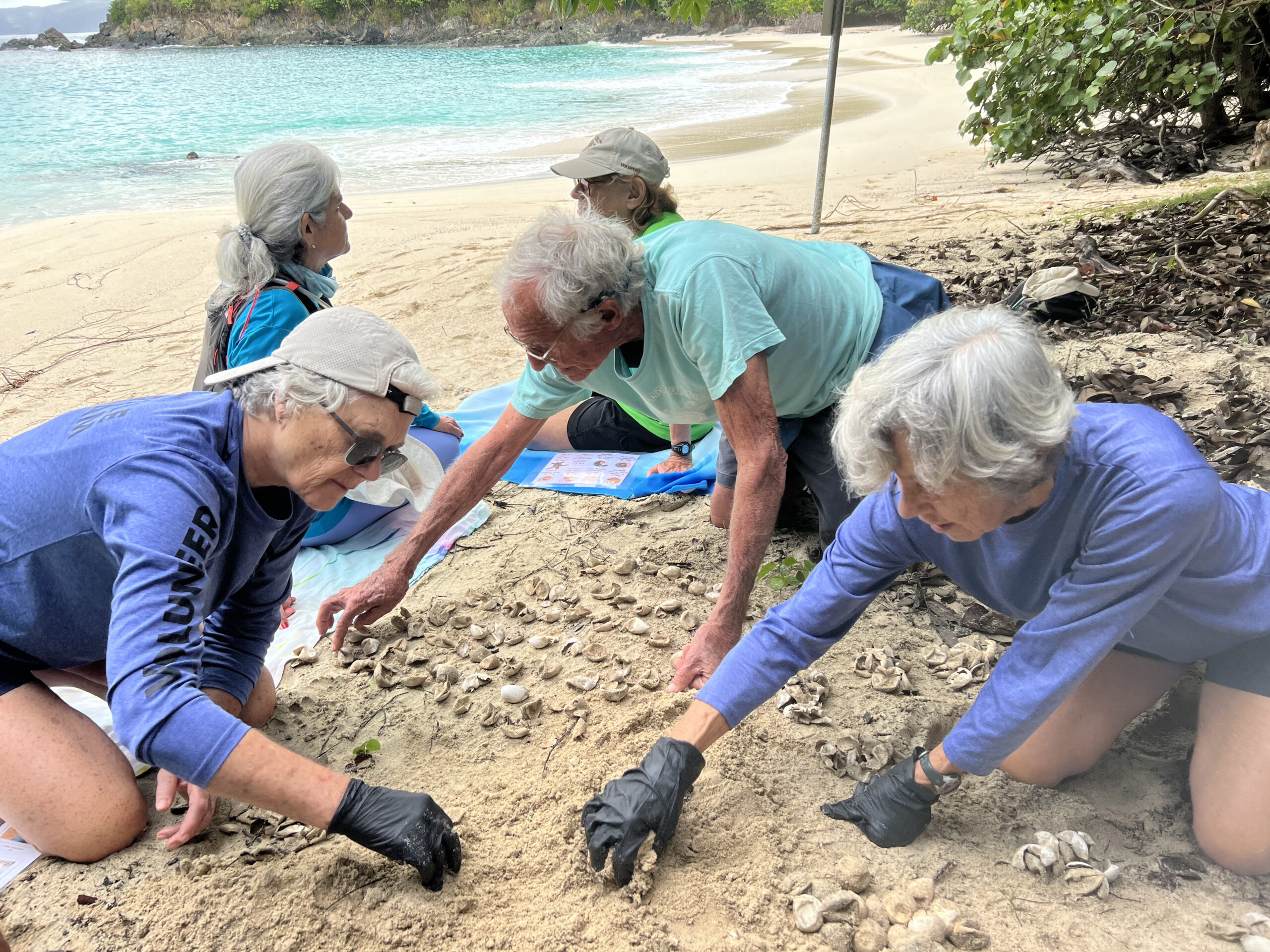
The patrols are a fun family activity; volunteers of all ages learn to identify the tracks of the three species of sea turtles that nest on St. John and distinguish them from the tracks of crabs, mongooses, iguanas, donkeys and deer. Volunteers can sign up for patrols in familiar areas, such as the popular North Shore beaches, as well as for remote spots including Lameshur, Europa, and Brown bays.
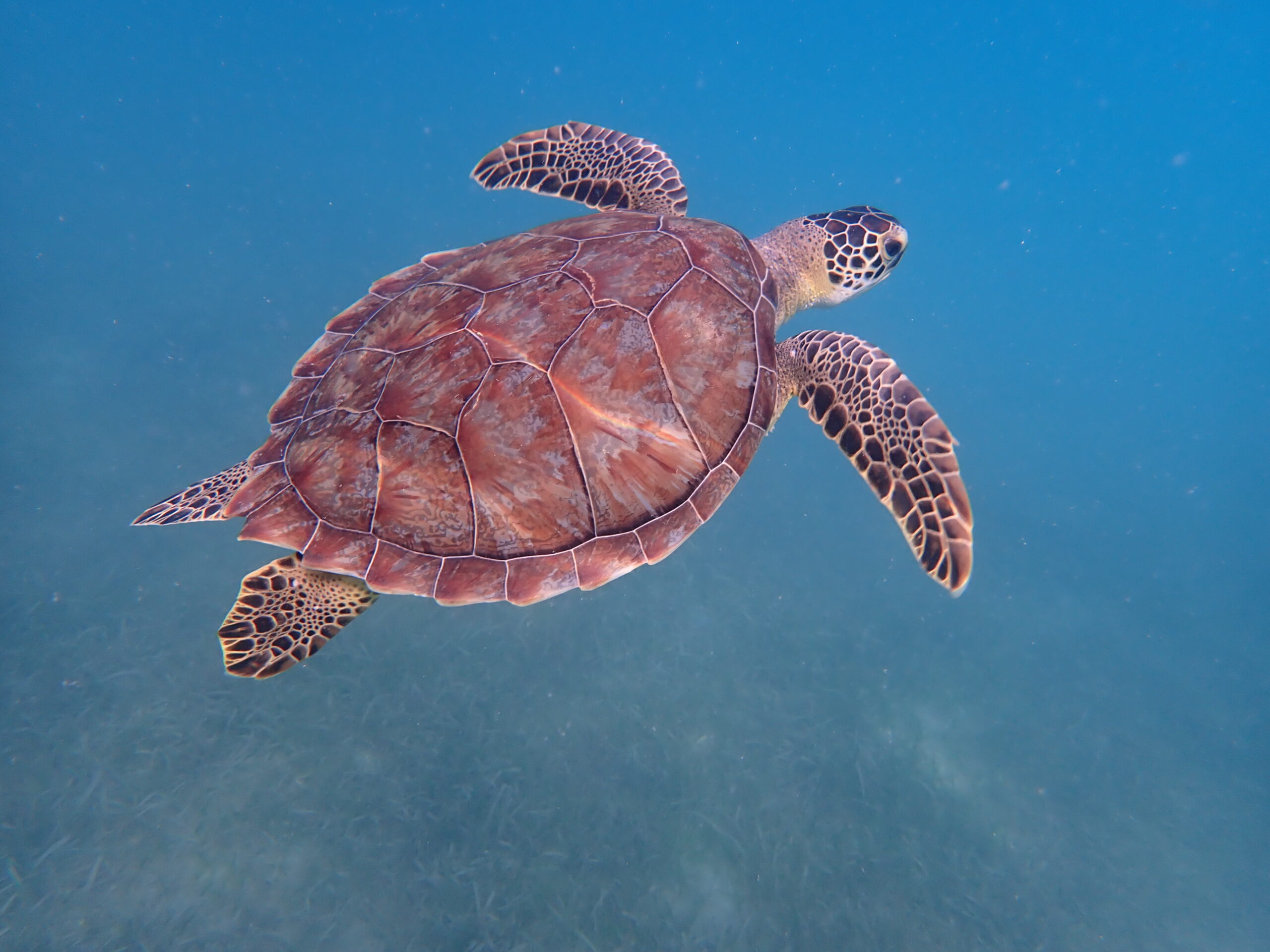
All three species of sea turtles in the Virgin Islands are endangered; experts now estimate that very few hatchlings will live long enough to reproduce; that’s why it’s important to protect turtle nests from predators, including dogs, mongooses, and poachers who believe the eggs have special health benefits.
When volunteers on a morning patrol find tracks of a nesting female, they call Willow Melamet, sea turtle program director, who quickly heads to the scene to screen off the nest from predators. Nests typically contain between 100 and 200 ping-pong ball-sized eggs.
By recording the date of the nesting activity, Melamet can predict when the nest is likely to hatch and keep a close eye on the activity. Once a nest hatches, volunteers assist in recording the number of eggshells to determine the nest’s success.
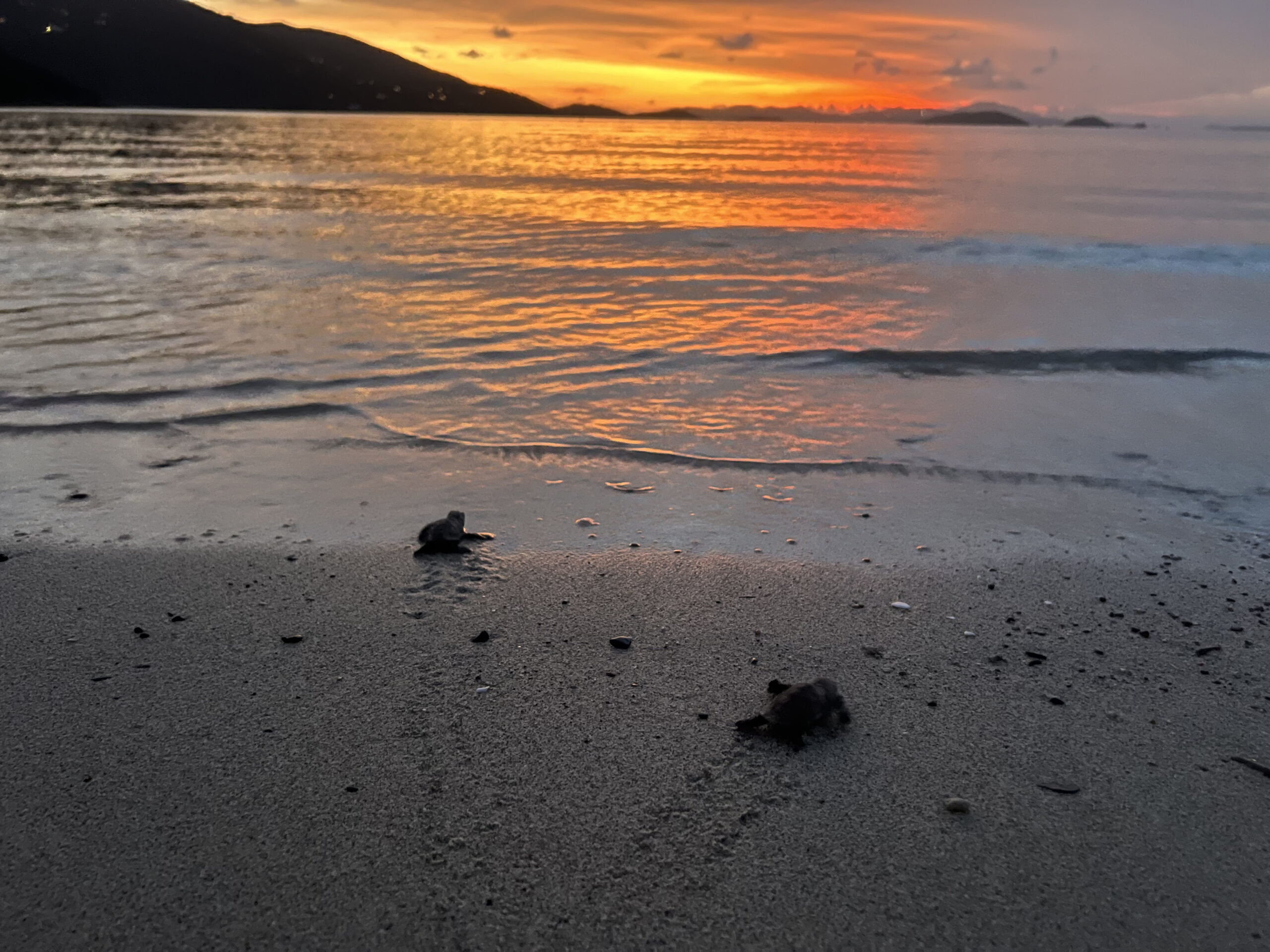
Witnesses to hatching events say it’s hard not to be moved by the baby turtles as they poke their way out of their shells, shake their flippers, and begin to waddle across the sand. Once the turtles reach the sea, they will spend the rest of their lives there except for brief periods when mature females return to their natal beaches to nest.
Volunteers typically sign up for an early morning patrol of a beach on a regular schedule, but there are opportunities for those who need more flexibility and for those who want to get more involved in scientific research or community outreach.